
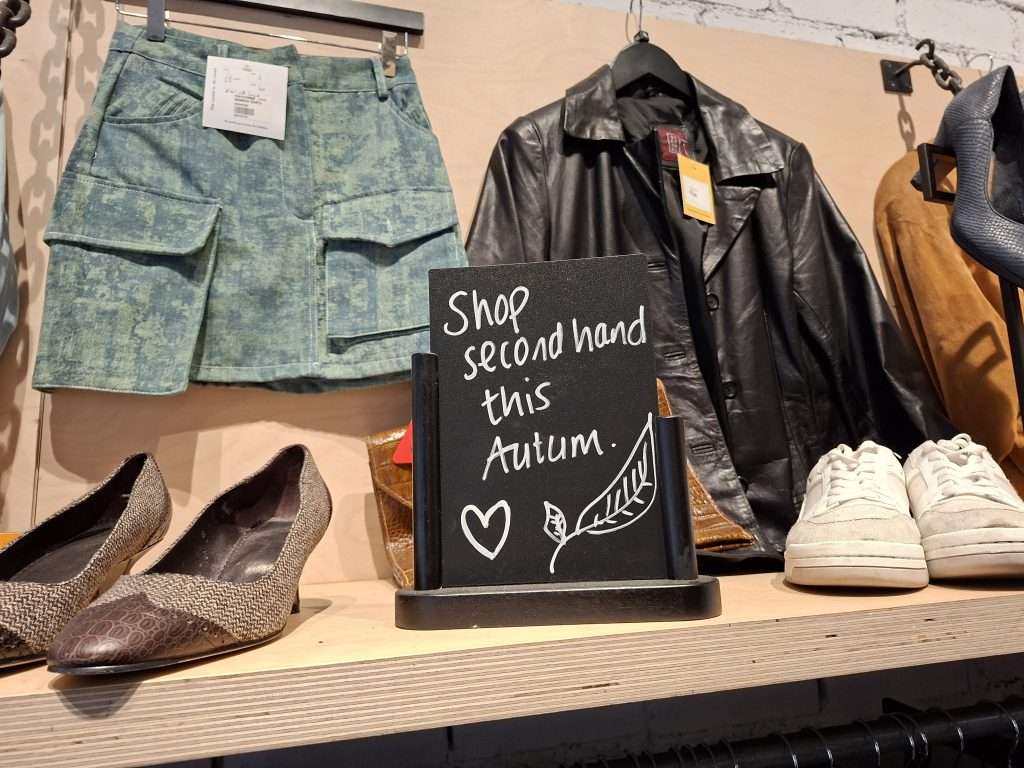
How practical is the necessary change to slow fashion and consumption in our daily lives?
A new season and semester have started, and with it the retirement of the Shein bikinis has given way to a raiding of the rails of H&M’s cable knit section. We allow ASOS to reach their next day delivery targets for yet another year and alongside such, 92 million tonnes of textual waste is dumped per the United Nations.
What is the flaw in the jeans crumpled underneath the multiple pairs of leggings and grey trousers crammed into our drawers? Or the doubling of t-shirts on our wardrobe rail? In truth, there are enough clothes currently on earth to fashion the next 6 generations. Why do we have this incessant need to consume, and why aren’t we conscious of it?
As someone who knows this all too well, since July, I have tried not to buy anything new. Excluding toiletries, food and my reading list, anyway. Was it successful? Yes and no. Consumption is fundamental in our social circles, and with a lack of third spaces, window shopping often results in buying a new jumper that, I quite frankly, can’t afford.
My purpose for documenting this change was to report whether shopping in charity shops for clothes, furniture, and other necessities is sustainable. For the average student, balancing studying, societies, a part-time job and the dishes can often be overwhelming, and the plates that are spinning can easily topple. The first thing we sacrifice is meal prepping, inevitably leading to buying a plastic-wrapped sandwich meal deal instead of our packed lunch. We do not need to ‘rebrand’ our wardrobe every Summer and Winter based on what social media deems as the new season’s print. Or buy the newest blush that does the exact same job as the one in your drawer.
As France has brought about stricter views on fast fashion and their top fashion retailer, Vinted, it is about time the UK followed suit.
It is often tempting when out with friends to pick something up; “retail therapy” is not just a figure of speech. However, the pair of shoes you have just purchased still carries your body the same way your four pairs at home do.
Since July, I have purchased a Zara dress due to being unprepared for a party (my mother’s, for which there is no excuse; her birthday is ingrained in my brain) and a pair of brown trousers from & Other Stories you will often see me running around campus in.
In Glasgow, there is a vast number of sustainable shops that allow for this “retail therapy” without costing the earth. The Eco-Hub on the second level of the University’s Boyd Orr, provides a swap shop for clothing. Byres Road is an oasis for charity shops, and Vinted allows us to sell and look for unique pieces.
In terms of food, I am very guilty of often buying products that then go to waste in my fridge. I am a vegetarian; however, this doesn’t exempt me from many wasteful habits. As much as I would like to buy locally from grocers – as many people who live in a city and have busy lives know – this isn’t always possible, and often, unfortunately, something has to give. This is the line between lazy convenience and necessary time saving. Although I have made a conscious effort to bring a reusable coffee cup to prevent waste!
Discarding the idea of new clothing may be controversial to the fashion world. As much as I understand and appreciate fashion as an art, it has turned into a fast-paced, inhumane, forced labour industry. Much of the country wears what influencers tell them to, or what is deemed as ‘trendy’. Typically, a mass-produced top from Urban Outfitters or Motel.
My retaliation to this would be fashion can and will continue. However, it must move forward with recycling in mind.
A mirror has been held to my way of consumption. Although it hasn’t been a gold star journey, everything I buy, I am now aware of its life that will live beyond me. We must all begin to question what we can change as consumers and what lies in the hands of companies and capitalist ways of living.
Photo Credits: Save the Children, Byres Road.