
Smart sleep tech, new treatments to treat epilepsy in children and many new research projects opportunities: what UofG has been up to this month. While students in Glasgow make progress on smart pillows to improve quality of sleep and find treatment for hard-to-treat epilepsy in children
This month at the University of Glasgow (UofG), researchers discovered a new treatment for children with hard-to-treat epilepsy, whilst others joined projects targeted at STEM development, and School of Computing Science researchers presented their smart pillow in Chicago, at the TEI ’26 conference.
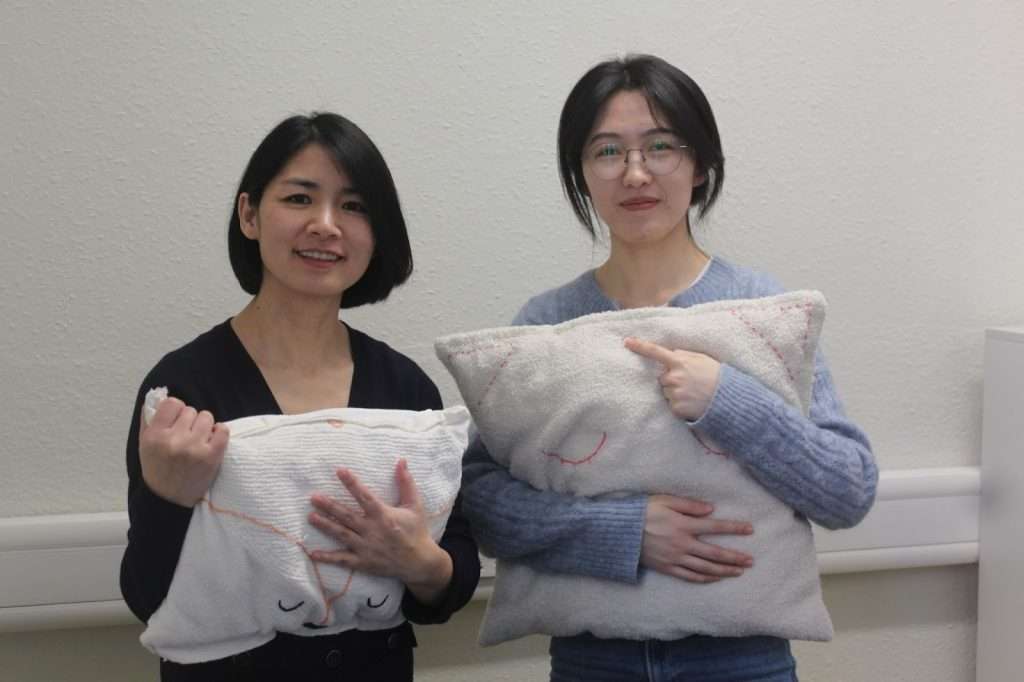
The pillow aims to reduce screen time before bed. Dr Xianghua “Sharon” Ding led the team that developed the device, which seeks to ease the negative effects of screen time before bed “[It] can have negative impacts on the quality of people’s sleep. Research has shown that it can delay the onset of sleep, making people more tired the next day and raising their chances of developing physical and mental health problems”. At the same time, she recognised how inevitable screen time can be, due to the comforting feeling it gives to people at the end of a long day “Digital consumption before bed can also allow people to meet important emotional needs. Smartphone content can help users decompress, relax, and enjoy personal time before sleep,” said Dr Ding. This is what inspired the development of the smart pillow. It is an ordinary pillow with a built-in speaker and tactile sensor. It can be synced with your phone through an app, and users can play their favourite relaxing music and audiobooks. “In developing our device, we wanted to explore whether it was possible to use the very familiar and comforting form of a pillow to harness the positive benefits of night-time smartphone use while cutting out the potential harms,” added Dr Ding. The cat shape does not only have an aesthetic function, but it has a functional one too: users can touch and press the pillow to control what they are listening to. Two sensors have been added to the ears to enable track skipping, and one sensor is located in the cat’s forehead, which allows users to pause and play tracks. Weiyun Wang, Kejin Yu and Dr Ilyena Hirskyj-Douglas of the University of Glasgow’s School of Computing Science contributed to the research.
While Computing Science students and researchers presented the smart pillow in Chicago, in Glasgow, UofG researchers collaborated on developing a new and safe experimental treatment for children with hard-to-treat forms of epilepsy, Dravet syndrome. Dravet syndrome is “a genetic condition which causes frequent, hard-to-control seizures and long-term neurodevelopmental impairment“. The new medication is called zorevunersen, and the trial found that children with Dravet syndrome experienced 91% fewer seizures when the medication was administered, and resulted in a “better quality of life and improvements in daily living skills” as recounted by Professor Andreas Brunklaus, joint first study author and researcher at the University of Glasgow and Honorary Consultant Paediatric Neurologist at the Royal Hospital for Children, Glasgow. The medication works by tackling the underlying cause of the syndrome, that is a faulty gene.
Professor Dame Anna Dominiczak, Professor Frances Mair and eight social science researchers will all join research projects which seek to find practical solutions to real-life problems. Professor Dominiczak will join the UK Medical Science Careers Taskforce, a new national taskforce launched by The Academy of Medical Sciences to identify and address gaps across clinical and non-clinical career pathways. By December 2026, Professor Dominiczak and other senior leaders in academia will produce a national “gaps and fixes career pathways map” highlighting how to improve career pathways for data scientists, research technicians and professionals working across MedTech and pharma.
In the meantime, beginning in autumn 2026, Professor Frances Mair will co-lead a consortium which aims to tackle inequalities in cardiovascular diseases (CVD). CVD contributes to a quarter of all deaths in the UK (26%), which equates to more than 170,000 deaths annually. However, not everyone is affected by CVD equally: higher risk groups include ethnic minority communities and people living in deprived communities. Professor Mair shared her ambition to bridge the gap between CVD and inequality, stating: “I’m delighted to have been appointed Research Co-lead for this Consortium that brings together expertise from across the UK with a shared ambition to move beyond business as usual, embedding equity into cardiovascular prevention and care, and delivering practical solutions that improve cardiovascular health for the communities who need them most.”
All the way in the eastern hemisphere, in India, the first group of students graduated from the Biocon Academy following the University’s partnership with Biocon. Biocon is India’s largest and leading biopharmaceutical company, and together with UofG, they developed the course MSc in Industrial Biotechnology to help students gain a more rounded understanding of biotechnology and its commercial applications. Student Cressida Neola Menezes expressed extreme gratitude for the opportunity of being part of this course, and thanked her lecturers: “I have been fortunate to learn from truly excellent lecturers who were incredibly supportive throughout the programme.”
Finally, eight UofG social scientists will be joining the Academy of Social Sciences Fellowship this spring. The Fellowship will understand and address some of the major challenges facing communities, society, places and economies. They are Dr Corinna Elsenbroich, Professor Margaret Fletcher; Professor Jonathan Havercroft, Professor Alison Heppenstall, Research Professor Lee Parker, Professor Kathleen Riach, Professor Melanie Simms, and Professor Ellen Stewart.
Speaking of economies, 2026 marks the 250th anniversary of the publication of The Wealth of Nations, one of Adam Smith’s most famous books and contributions to the modern economy. The University will celebrate it throughout the year. As Principal and Vice-Chancellor Andy Schofield puts it, “The Wealth of Nations brought forward ideas and insights that now feel fundamental, but in Adam Smith’s time were nothing short of transformative.” Some initiatives will involve walking tours of Glasgow in Smith’s lifetime, an exhibition from UofG archives, Glasgow Life collections with Centre for Racial and Equality Rights, and a student competition to re-design the front cover of the book. Additionally, a conference will be held in October, named Wealth of Nations at 250: Understanding Prosperity and Development in the Modern World, which will reflect and examine why some nations prosper while others remain poor. Overall, to Schofield, the anniversary represents “an opportunity for thoughtful, engaging conversations about what his thinking still offers us today and how we can draw on those ideas to tackle the very real challenges facing 21st-century society.”
Other initiatives happening this year will see S3 students from across the Dumfries and Galloway region taking part in a fully funded field course this summer. The initiative is led by UofG and seeks to inspire young people to consider a future career in environmental science, ecology, and sustainability. During the free courses, they will take part in different initiatives, including wildlife surveys, habitat assessments, and environmental data collection.
Photos: UofG press
