
How the Booker Prize Lost its Way.
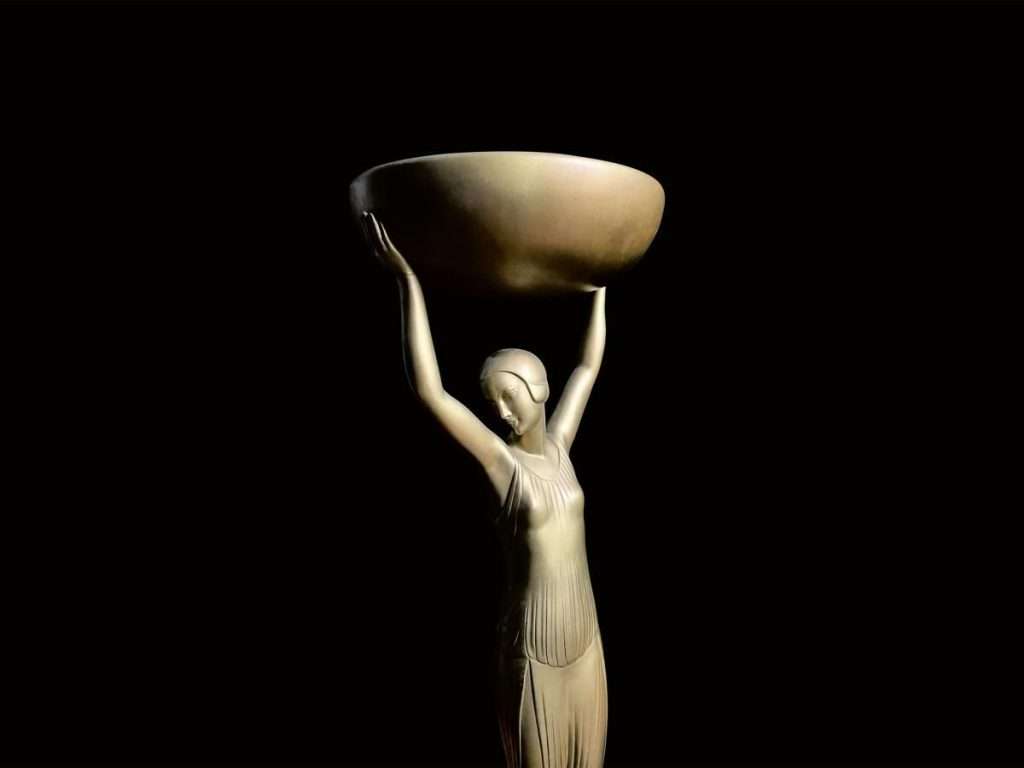
For years London’s Guildhall has presided over the annual gathering of Britain, Ireland, South Africa and the wider Commonwealth’s most prominent authors, each vying to attain the gold-tinted ‘Iris’ – a symbol that one’s work was to be properly recognised as synonymous with literary excellence. The prominence of literature’s most esteemed accolade, one awarded amidst a haze of cigarette smoke, loosened black ties, and overspilling cups of wine, was evident throughout British society; the Prize was an everpresence in daily chatter while its holder saw their name inked on the front page of a litany of nationally published newspapers.
So what happened? These recent years have witnessed a marked downturn in both the societal standing of the Booker Prize and the overall relevance of the institution itself, raising questions as to whether the era of literary celebration has drawn to a close.
Popular discussions surrounding the decline of the Booker Prize, whose name has undergone three iterations since its inception in 1969, have primarily centred on administrative concerns. In 2013, the decision to expand the nominee pool to accommodate American writers was met with relative disquietude. AS Byatt, whose novel, Possession: A Romance, saw her bestowed with the 1990 Prize, remarked that such an expansion would ‘make judging impossible’ as an already voluminous workload (which encapsulated reading, assessing and reflecting upon a novel a day on average) already buckled judges without the looming Star Spangled addition.
Byatt’s workload-oriented concern was not the only criticism levelled at the adoption of the States; Professor John Mullan, an ex-judge, cited the move as potentially ‘diluting the identity of the prize’ by diverging from a nominational basis which saw books of similar cohesion from across the world assessed in a uniformed light. Mullan’s view was not unfounded – indeed, much criticism has been levelled at perceptions of the Prize’s deviation from its original mandate, having been marred by claims that the Iris now rewards broad appeal and popularity over the literary excellence which it was once hailed for recognising. Perhaps the role of mainstream American Publishing Conglomerates, who have launched well-funded lobbying campaigns to have their respective authors win the Iris and her accompanying £50,000 prize, has played a role in this degradation. Perhaps Mullan was right.
Yet administratively focused criticisms, which have also featured notable calls to revise the composition of the judging panel, have almost universally failed to recognise that it was stark revisions to the institution that have resulted in its unfortunate downturn in the first instance. The 2020 Booker Prize shortlist was widely praised for presenting a diverse scope of novels and authors, but the winner, Douglas Stuart’s Shuggie Bain, had been rejected by 30 publishers prior. Hardly the hallmark of excellence which the Iris once stood for. 2024 saw the appointment of actress Sarah Jessica Parker to the judging panel – one met with a mixture of jubilation and chagrin. While Parker was an avid reader and would bring much-needed attention to the Prize, was it right to insert an actress in a panel traditionally filled by accomplished authors and academics?
Gone are the days of the televised, black tie ceremony in Guildhall, one which presented numerous drunken victory speeches, judges earnestly threatening to throw themselves out of windows if their picks didn’t triumph (seriously, see Philip Larkin in 1977), and the headline grabbing feud between senior authors Anthony Burgess and William Golding, in which Burgess refused to grace the ceremony with his jubilant presence unless his victory was confirmed in advance (he lost, and was left humiliated).
But that is what once was. The Booker Prize ceremony now exists as a casual affair, hosted in the comparatively modest Old Billingsgate market in London, where publishers lobby, and an oversaturated pool of nominees further stretches a judiciary panel already struggling to cater to evolving tastes (when really, they needn’t bother if it is sustained relevancy which they crave). It was the drama, the controversy, the entertainment and the theatrics which captivated audiences and made the Prize relevant. A celebration of literacy in its purest form – necessitating the eccentricities of (many) desperate and impoverished writers longing for their breakthrough into the sphere of relevancy, and it is to this setting that the Booker Prize must return if the institution wishes to revisit the prevalence it once enjoyed.
Image Credit: The Booker Prizes
